Peter Neal: A Bibliography
Peter Neal arrives in Rome as an established name. His novel Tenebrae has occupied the Italian bestseller lists for twelve weeks. He has an agent, a schedule, and a media strategy - he is as much a product as the books that bear his name. When asked about his process he is equally methodical: a month of research, three months for a first draft, two for revisions, three books produced consecutively over two years. This is not the solitary genius agonising over a blank page but authorship as sustained commercial output.
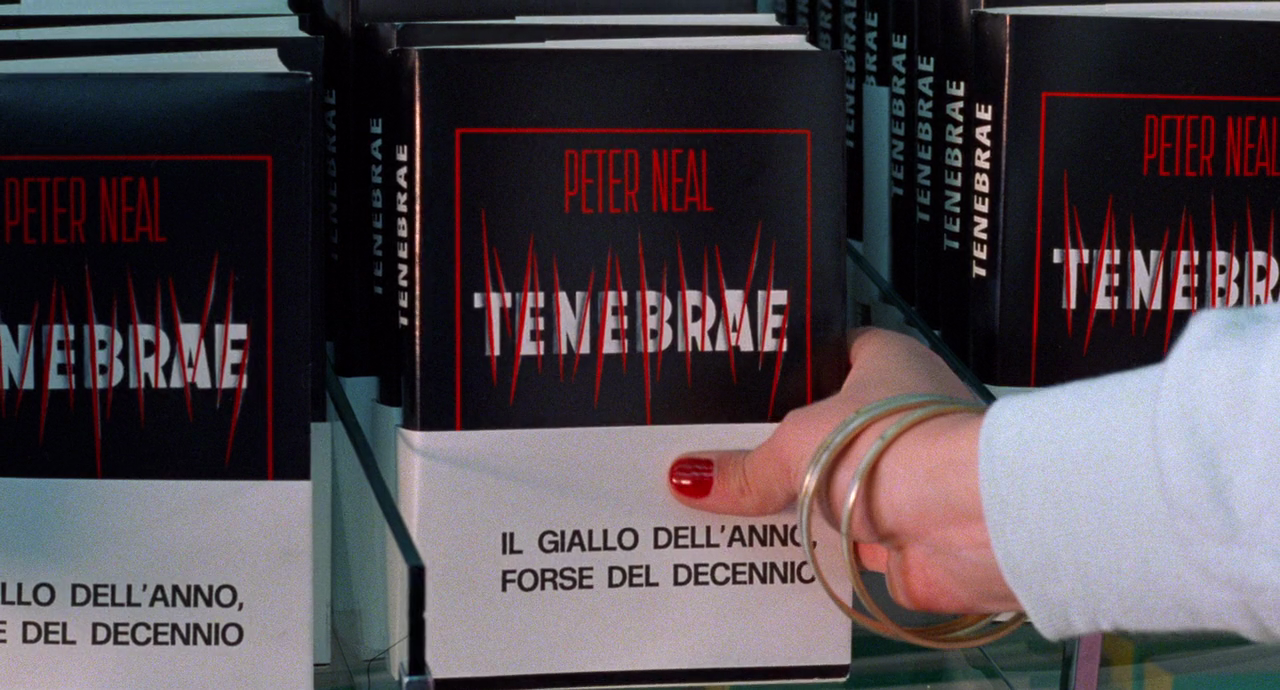
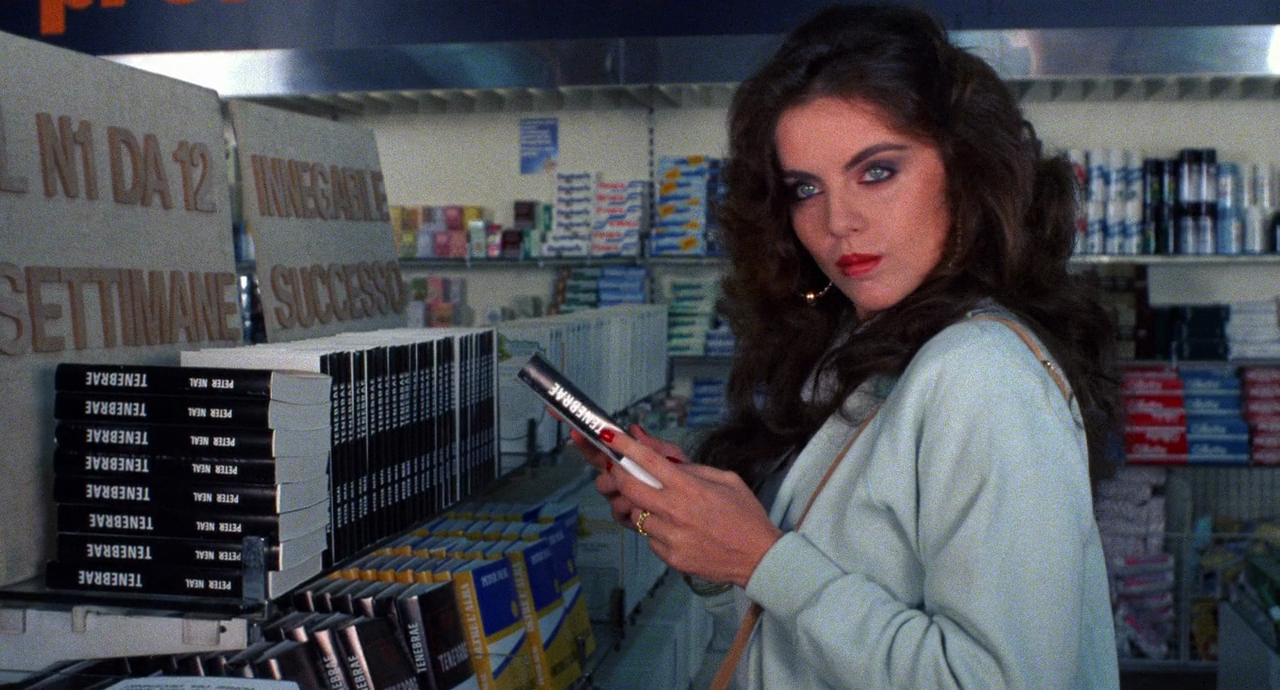
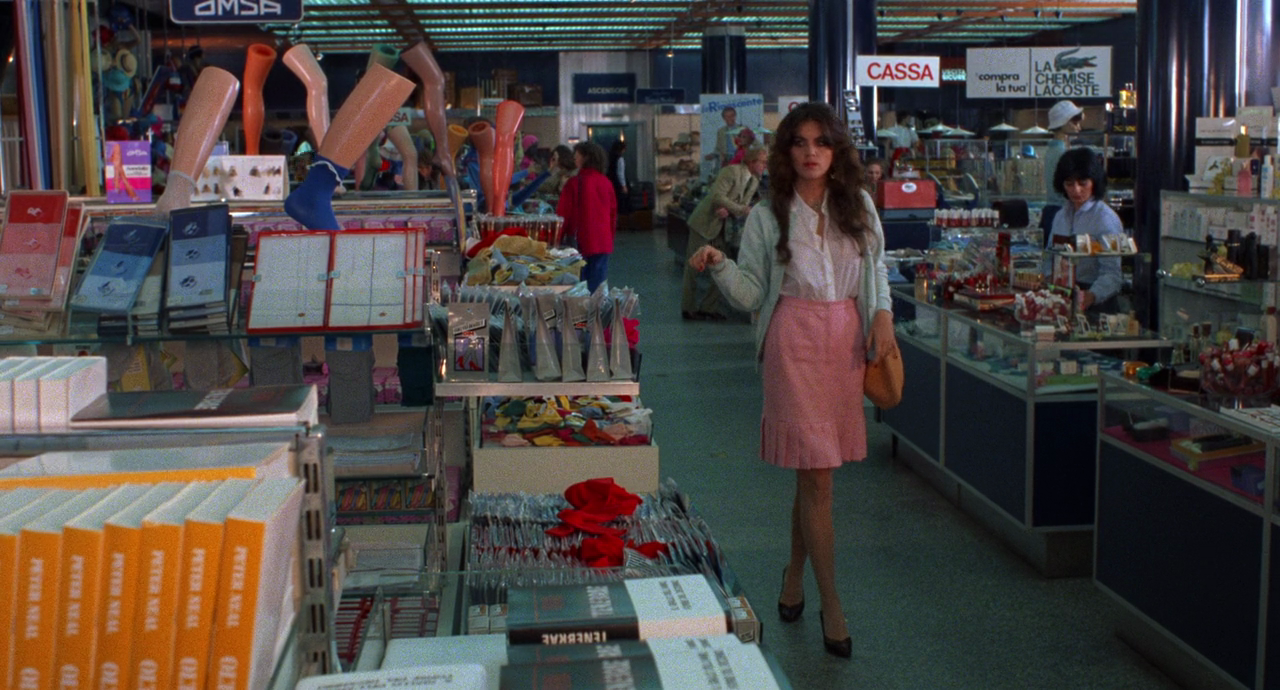
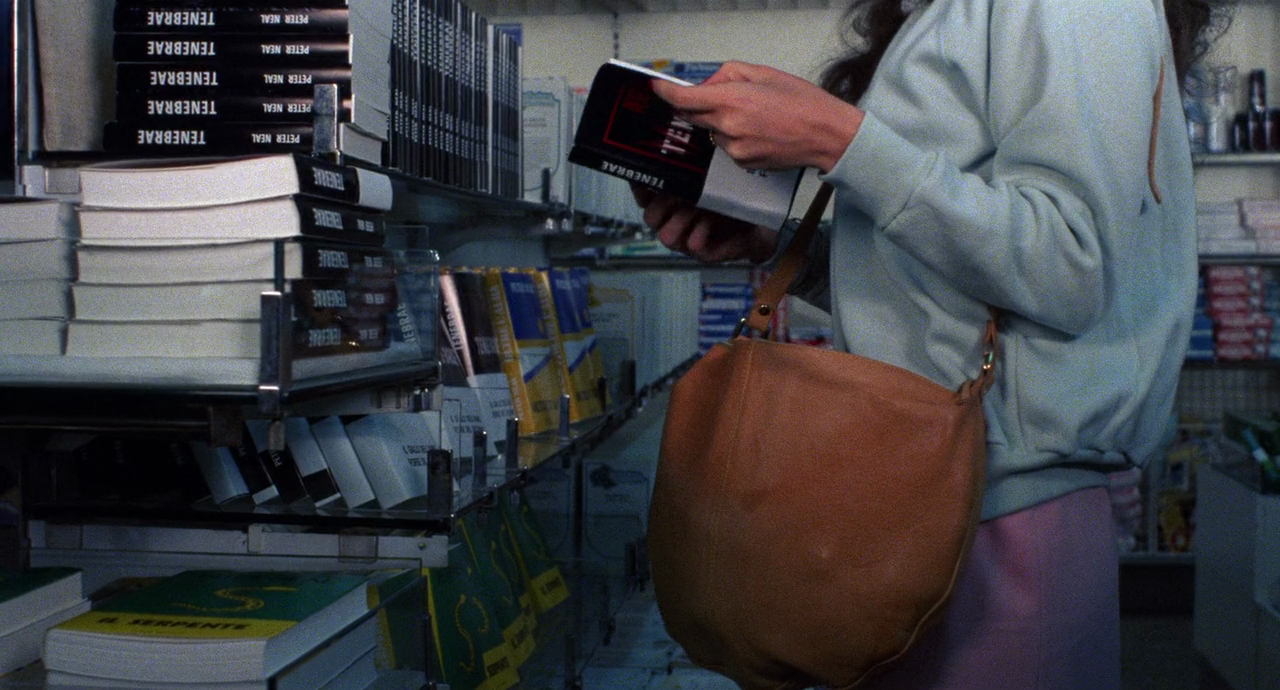
The first time we encounter Neal's work is not in the professional surroundings of a press conference or the television studio but in a department store. The enigmatic shoplifter Elsa Manni wanders through the bright aisles of La Rinascente on Piazza Fiume, Lacoste signs overhead, mannequin legs in the foreground, and there among the perfume counters and the hosiery is Peter Neal, stacked in his dozens. The cover of the Italian edition carries its tagline with pulp confidence: Il Giallo dell'Anno, Forse del Decennio. The thriller of the year, maybe the decade. Neal's fiction sits here as a product among products, accessible, commercially positioned, part of the everyday flow of consumer life.
The pulp thriller as a commercial entity, found within the department stores of Italy, was common practice and part of a long publishing tradition. The very term "giallo" originates from Mondadori's vividly yellow-covered crime paperbacks, which brought international crime and detective fiction to Italian readers throughout the mid-twentieth century. Neal, a bestselling American thriller writer whose work has been translated and distributed across Italy, belongs to that lineage as evidenced by his backlist. Alongside the stacked copies of Tenebrae in the La Rinascente display sits Il Serpente (The Snake). On the coffee table at the press conference, Oltre l'Alba (Beyond the Dawn) joins both novels. Neal is an established name with a catalogue, his novels products designed for mass circulation in the same tradition as those yellow Mondadori spines, though where the giallo tradition imported its stars, Neal has become one in his own right, his name the draw, his backlist the brand.
Argento could have made Neal a literary novelist, a prestige author whose work attracts critical attention rather than department store placement, but he eschews this in favour of something more self-aware. In anchoring the film's meditation on authorship in mass market thriller fiction, he situates it within the very tradition he himself emerged from, the Italian giallo, with all its pulp pleasures and commercial imperatives intact.
The titles of Neal's other novels feel immediately at home in the pulp thriller tradition, evocative and slightly sensational in the way the best genre titles are. The Snake promises predation and corruption, the serpent being one of Western culture's oldest symbols for hidden danger, but the serpent is also a creature of shedding and doubling, of hidden movement beneath the surface, and Neal himself operates in exactly this way throughout the film, the public novelist and the private murderer as two skins worn over the same body. But it is the relationship between Beyond the Dawn and Tenebrae that is most suggestive. Dawn and darkness, one implying a step beyond light, the other naming what lies on the other side. The two titles mirror each other almost perfectly, and there is a further irony in the film that shares its name with Neal's novel. Tenebrae means darkness, yet Argento instructed his cinematographer Luciano Tovoli to use as much light as possible, deliberately breaking with the shadowy expressionist tradition of horror cinema. The result is a film that is almost relentlessly bright, crimes unfolding in stark overexposed spaces. The darkness Tenebrae promises turns out to be moral in nature.
We know relatively little about Neal's other novels beyond their titles and brief glimpses on shelves and coffee tables. Maria, the building owner's daughter, tells Neal she read Beyond the Dawn and found it terrific, and that the bookshop on the corner has a window display dedicated entirely to his books — the only moment in the film where a character expresses straightforward admiration for his earlier work, and delivered by someone who will be murdered by the man Neal's fiction inspired. Germani, meanwhile, has read Neal's entire back catalogue with the exception of Tenebrae and in a rare moment of detective success, guessed the killer on page thirty of his previous book. For a police inspector who freely admits he has never been able to solve a mystery in fiction, this is something of a personal triumph. The deeper irony is that Germani, who can finally see through Neal's plotting, cannot see through Neal himself.
Tilde's accusations of misogyny during the press conference are directed at Tenebrae specifically, but "your work" is ambiguous enough to imply it's part of a broader pattern. We know nothing of the content of Neal's other novels, but viewed within the tradition of mass produced crime fiction of the period, a genre in which violence against women was routine currency, it would be surprising if they were markedly different. Neal presents himself as something more considered than that, urbane, articulate, intellectually confident, the kind of author who argues back against his critics with wit rather than defensiveness. He is not the anonymous hack churning out exploitation paperbacks. He is a name, a brand, a public intellectual of sorts which makes Tilde's accusation particularly pointed. She is not challenging someone who never claimed to be anything other than exploitative. She is challenging someone who believes his intelligence and his intentions should insulate him from his content. Neal's response, you know me personally, you know I'm not like that, is the classic defence of the respectable author of disreputable material. The film, of course, has other ideas.
A body of work invites a particular kind of scrutiny. Each new title adds to the evidence, giving readers more material to project onto, more thematic threads to pull. Neal's backlist has produced admirers like Maria, detractors like Tilde, devoted readers like Germani. And then there is Berti. Cristiano Berti, the Catholic television critic whose obsession with Neal's work will prove fatal, has read the entire back catalogue, The Snake and Beyond the Dawn presumably among them, before arriving at Tenebrae, the book he will use as a framework for his own violence and the most unsettling illustration of what a body of work can become once it escapes its author. Publication, in Tenebrae, is an act of irreversible exposure.
Tenebrae is not interested in the author agonising over literary respectability but in the public author navigating reputation. Neal exists within a system of contracts, publicity tours and media management. His agent worries about optics. His books are marketed as chart-topping events. The author in Tenebrae is inseparable from the machinery that sells him and the more widely his work circulates, the less control he retains over its meaning. Success, for Neal, comes at a price.
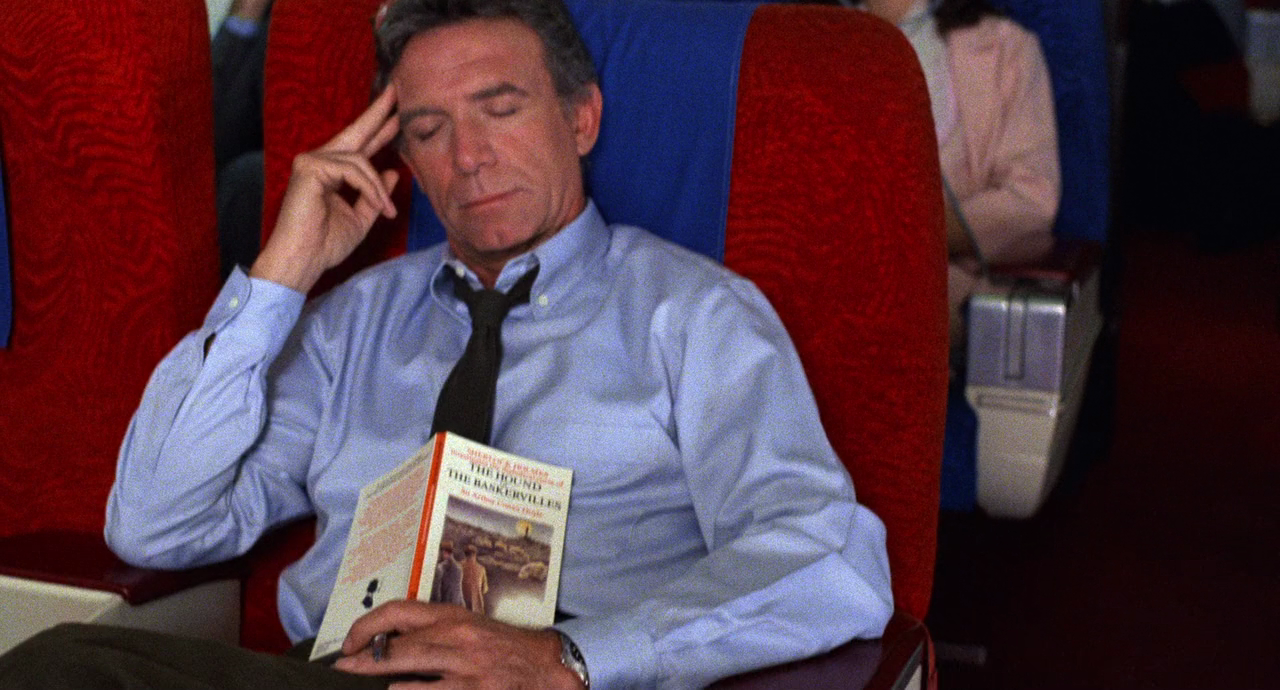
There is one more book in the production design worth noting, and it belongs not to Neal's backlist but to Neal himself. On the flight to Rome, before any of the murders have begun, Neal is shown dozing over a copy of The Hound of the Baskervilles by Arthur Conan Doyle. It’s a small detail, but it becomes significant later when Germani quotes Doyle's famous dictum about eliminating the impossible to find the truth, attributing the line to The Hound of the Baskervilles — in actuality the quote is from The Sign of Four.
Although likely an error on Argento's part, it's one that fits the film perfectly. In a film so preoccupied with who is reading what and how correctly, Neal carries The Hound of the Baskervilles to Rome, the very book Germani will later misattribute the quote to. The right author, the wrong book, cited by a detective who cannot solve the real mystery standing in front of him. Nobody in Tenebrae is reading quite carefully enough.
This piece and The Rest Was Like Writing a Book: Fiction, Guilt, and the Limits of Authorial Innocence in Tenebrae are both freely available to read on Hypnotic Crescendos and are a preview of what Retinal Burn has to offer. Retinal Burn is a forthcoming film zine from Hypnotic Crescendos, with one issue dedicated to Tenebrae specifically, available as a digital publication. If you'd like to see that issue realised, please consider showing your support via the Retinal Burn page, leaving a comment, or getting in touch directly.