Montreal Biodôme in La course du lièvre à travers les champs (René Clément, 1972)
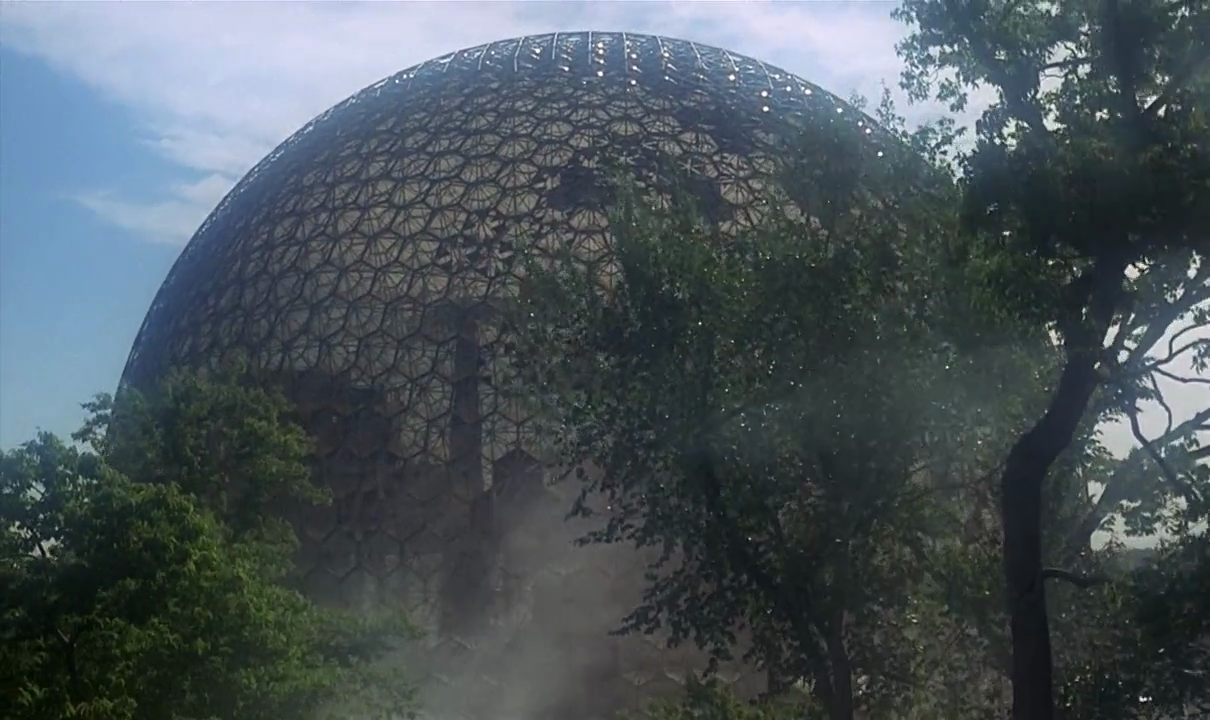
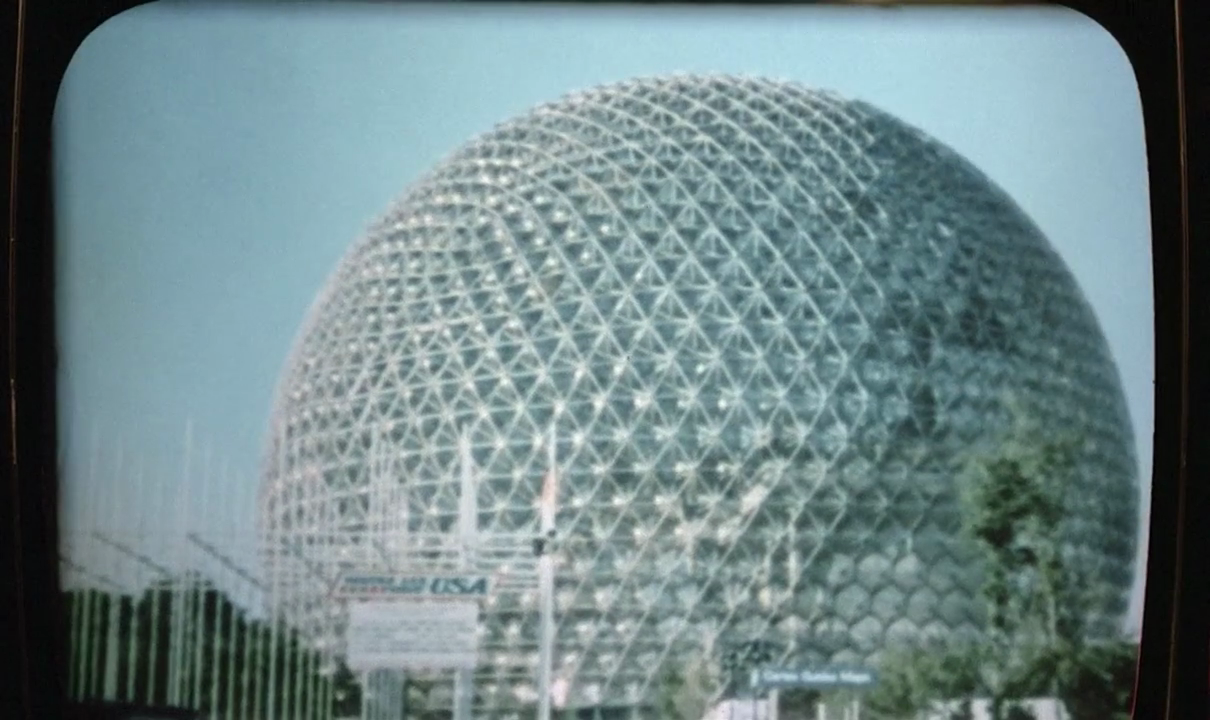
Many moons ago I visited Montreal and fell in love with the architecture of Expo 67, a futuristic landscape shaped by mid-century optimism and experimental design. Years later, I was struck by the appearance of the Montreal Biodôme in La course du lièvre à travers les champs, recognising its distinctive geodesic design from my past travels. Originally built as the United States Pavilion for the Expo, the structure carries with it the ambitions of a very specific moment in postwar design, when architecture was tasked with imagining a better, cleaner, more mobile future.
There is something about Expo-era structures that feels inherently cinematic. Whether it is the Biodôme here or Habitat 67 in The Disappearance, these buildings seem to invite a particular kind of framing. Their bold geometry and speculative logic often detach them from everyday realism, allowing them to function less as lived spaces and more as visual propositions.
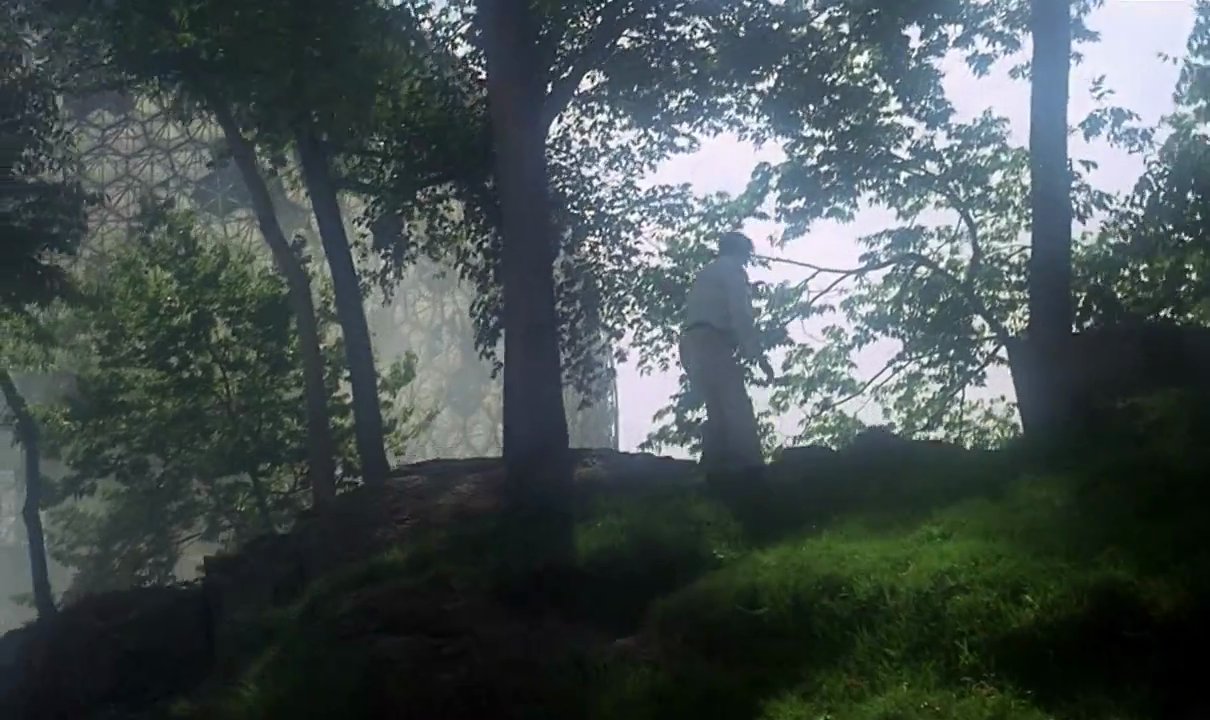
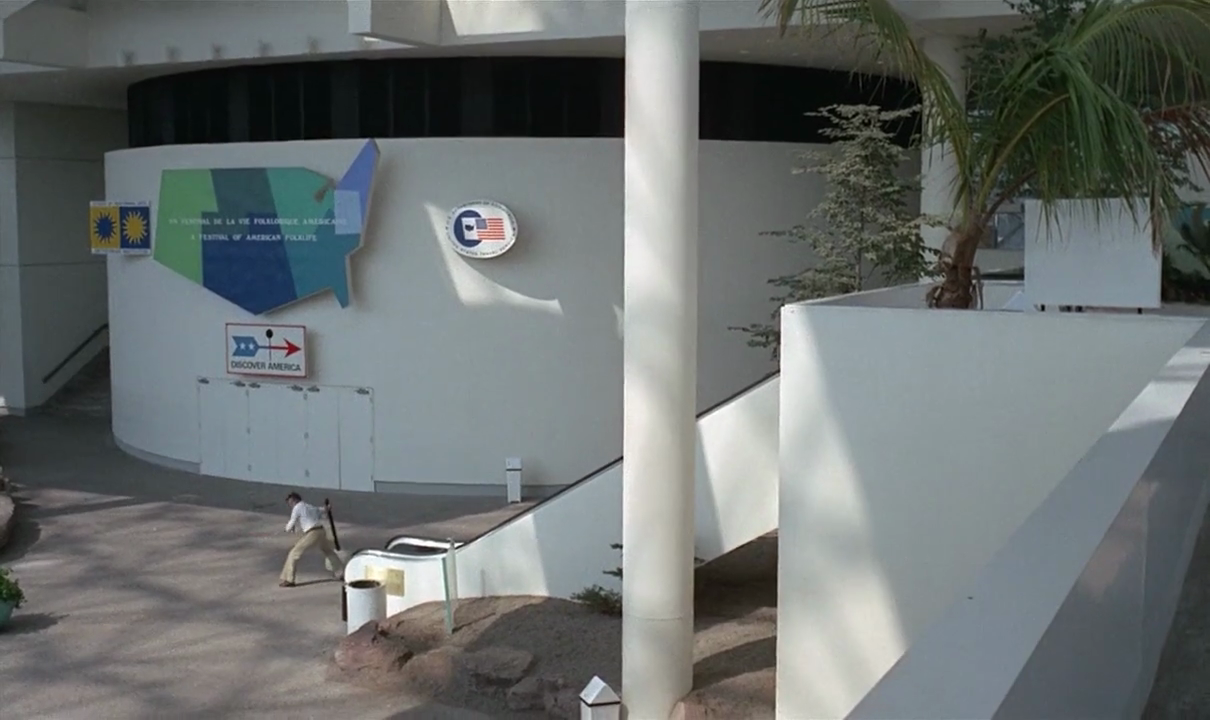
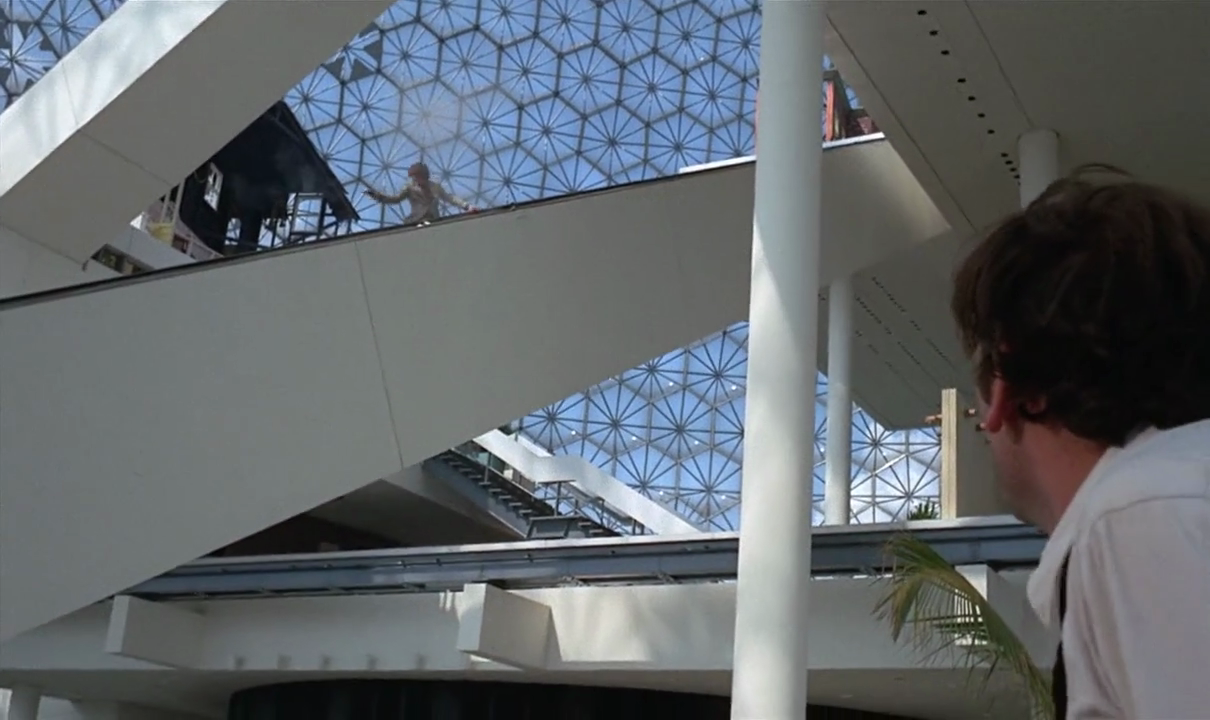
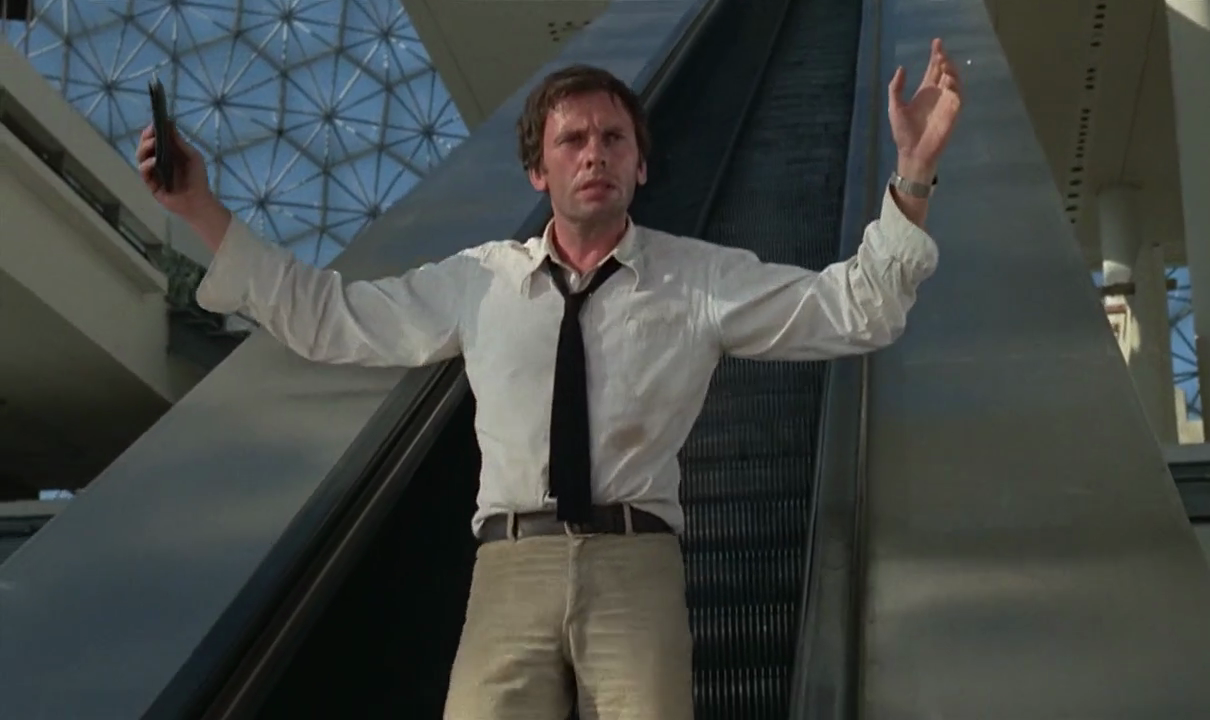
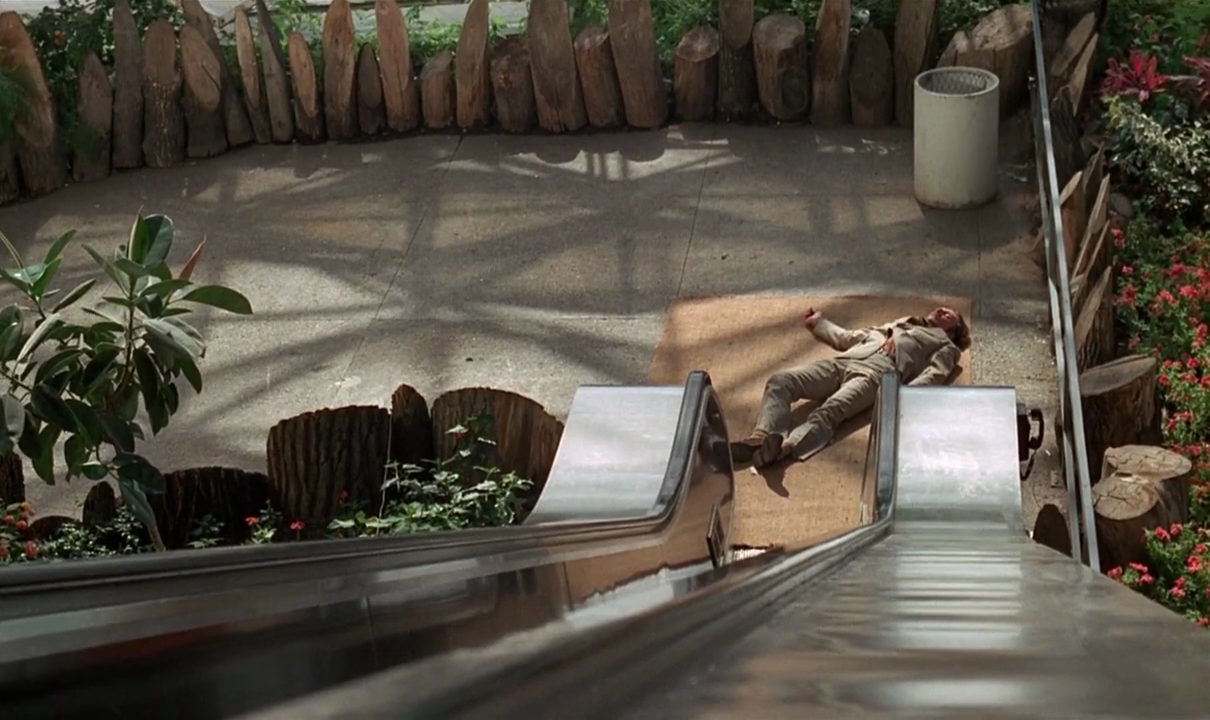
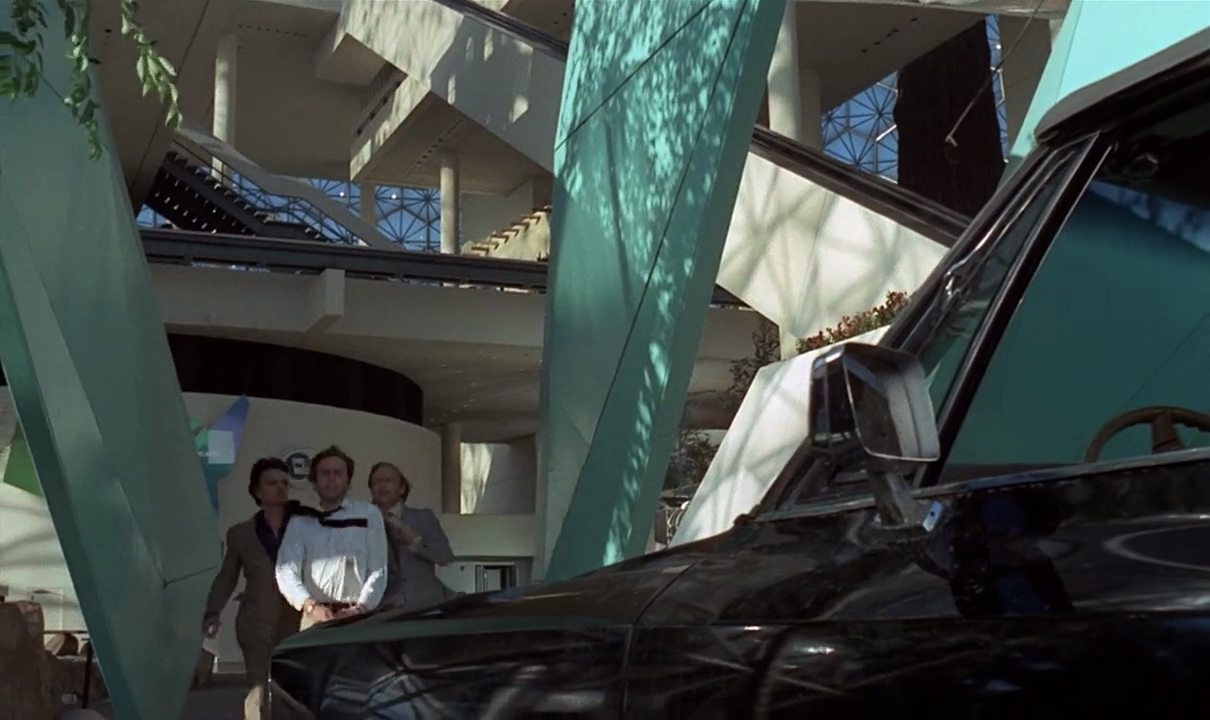
In La course du lièvre à travers les champs, directed by René Clément, the Biodôme becomes the setting for a pivotal chase sequence, as Antoine Cardot, played by Jean-Louis Trintignant, escapes from his pursuers and forces his way inside the structure. What follows is a tense shoot-out that unfolds within the building’s vast interior spaces.
The Biodôme’s distinctive geometry makes for an unusually charged setting for this burst of action. Its open volumes, exposed framework, and steep escalators heighten the sense of visibility and vulnerability, turning the chase into something more spatially expressive than purely kinetic. Movement is framed by architecture, with bodies dwarfed by the scale of the structure and action dispersed across escalators, levels, and open concourses.
This is what draws me back to these buildings when they surface in cinema. They are artefacts of belief, carrying the residual optimism of a future once imagined. Long after the scene has passed, the architecture remains as an afterimage.