License to Curl
I’m Scottish and it’s the Winter Olympics, which means I am currently experiencing my compulsory, once-every-four-years fascination with curling.
This enthusiasm will last precisely as long as the tournament and will then lie dormant until 2030, when I will once again pretend I’m fluent in power plays, the hog line, and hammer advantage, offering tactical opinions from my sofa as if Bruce Mouat hasn’t already calculated three moves ahead while I’m still double-checking that the button is, in fact, the middle bit.
As fun as it has been to see viewers from around the world fall in love with curling, and the quiet delusions of those who believe they could absolutely slot into an Olympic end “no bother”, it’s not exactly a winter sport cinema has embraced.
Ice hockey? Constantly.
Figure skating? Of course.
Bobsleigh? Naturally. The ‘90s made sure of that, thanks to Cool Runnings.
Curling, however? Practically non-existent.
The notable exception, however, is Men with Brooms, a 2002 Canadian rom-com directed by and starring Paul Gross. Its existence is hardly surprising given that Canada is the modern superpower of curling.
But before curling was a prairie obsession, it began on Scottish ice.
Curling originated in Scotland on frozen lochs and has been played here for hundreds of years, long before television cameras or medal tables. You could say the sport is etched into the landscape.
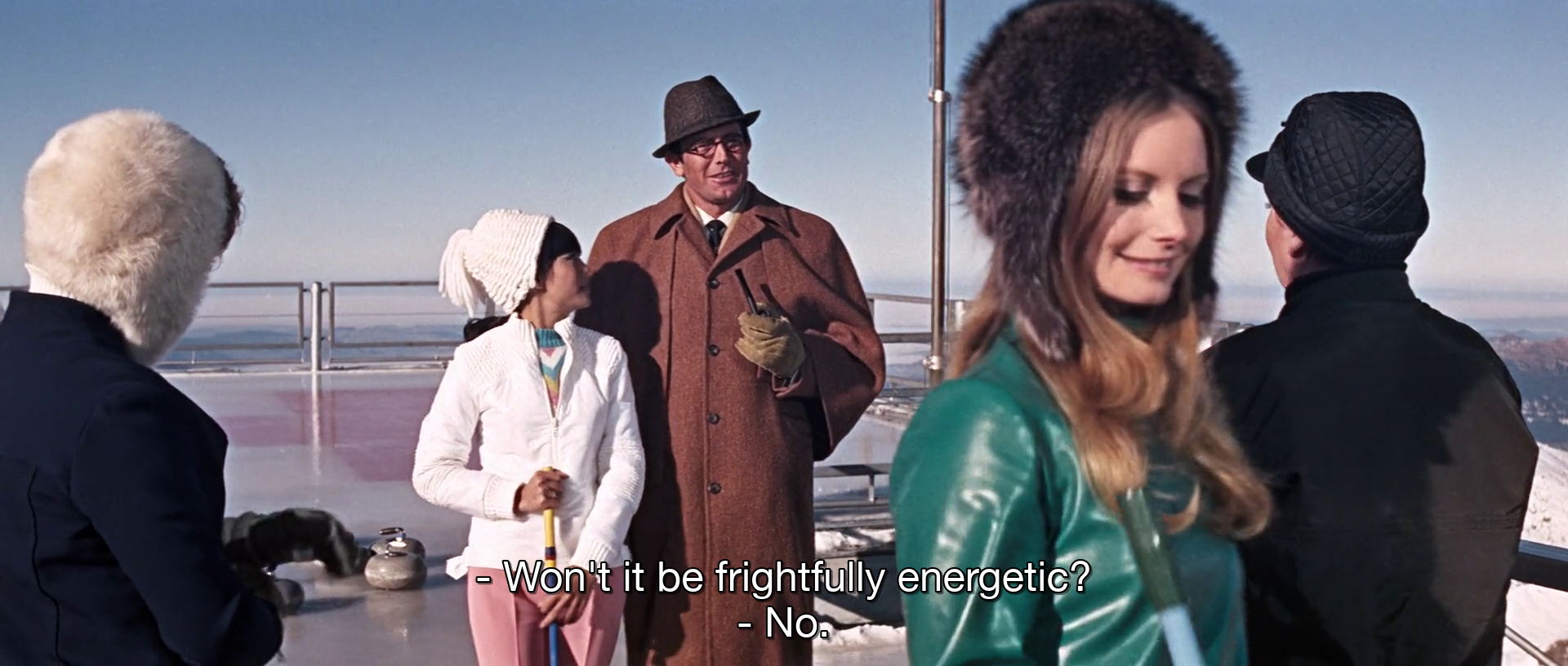
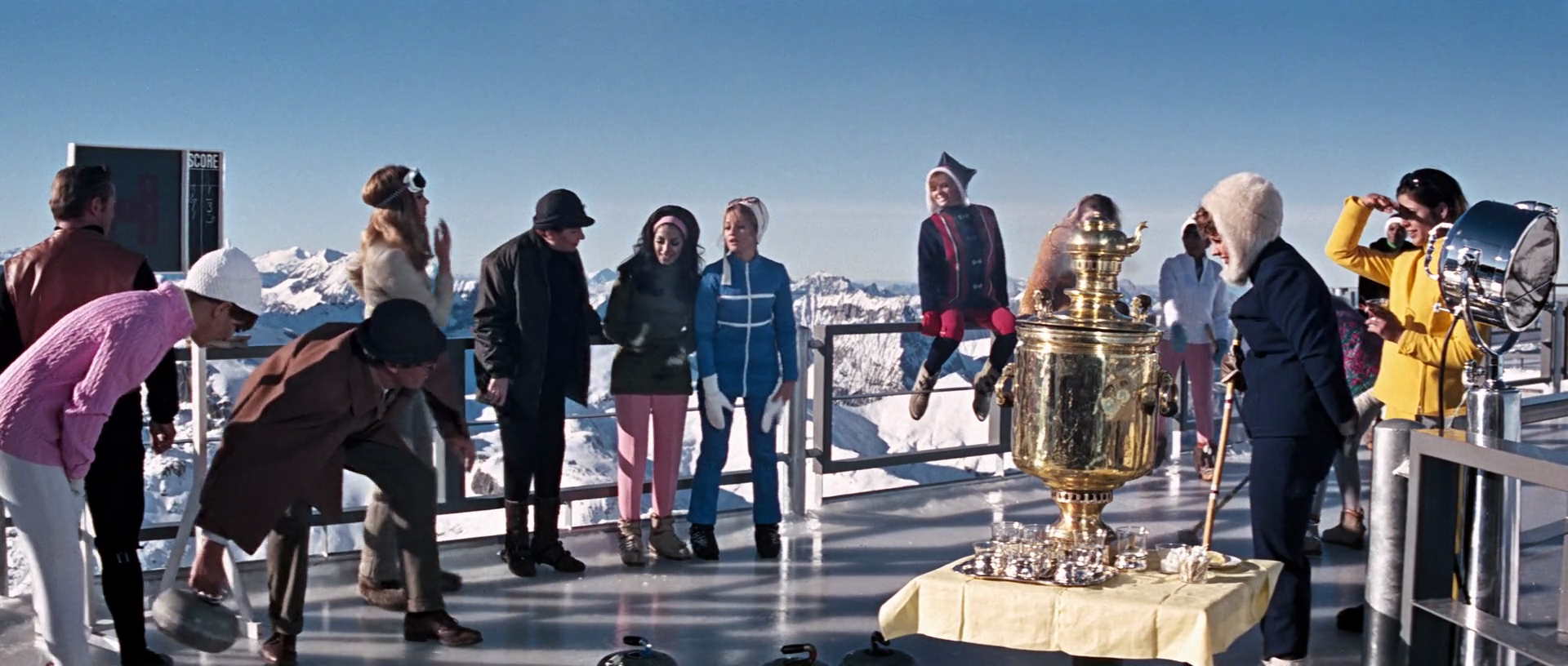
Which makes it particularly funny that one of the most effortlessly suave, globally mythologised Scottish characters in cinema — James Bond — encounters curling in On Her Majesty's Secret Service and admits he doesn’t know how to play.
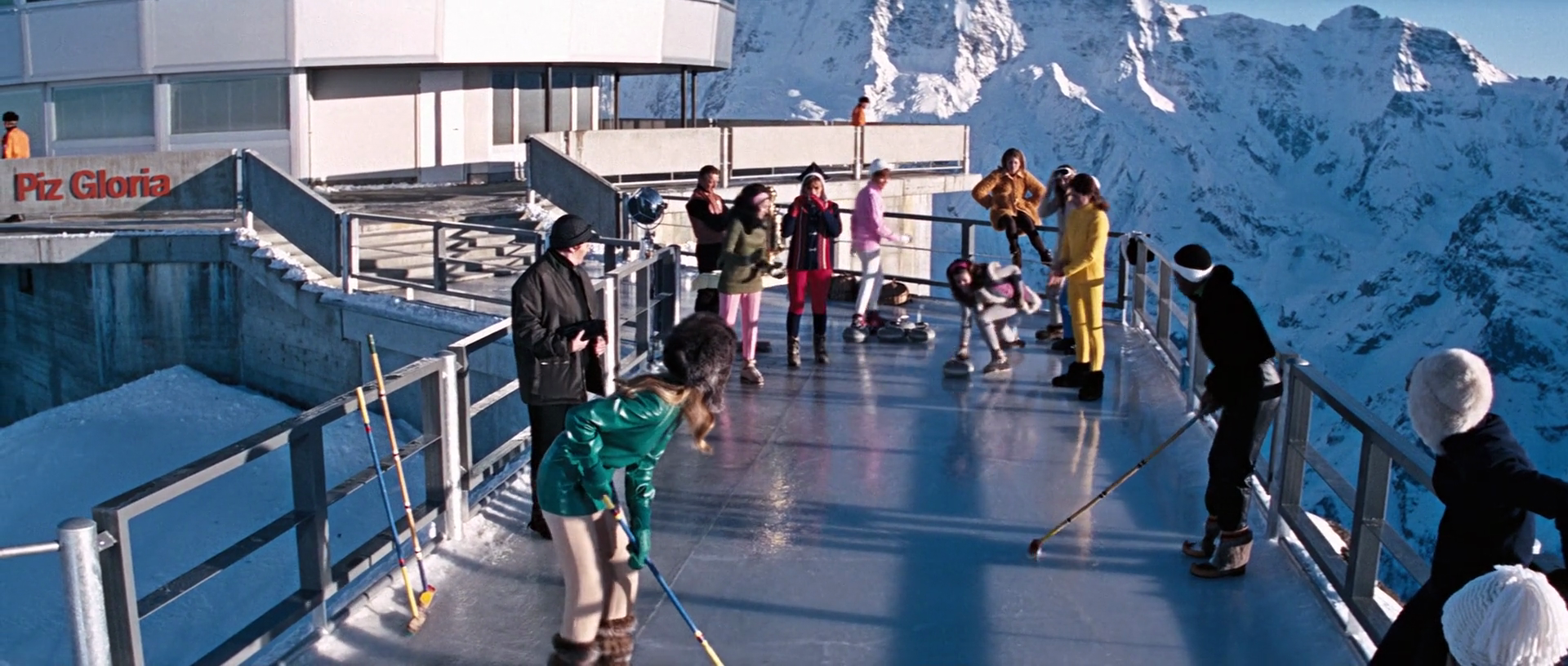
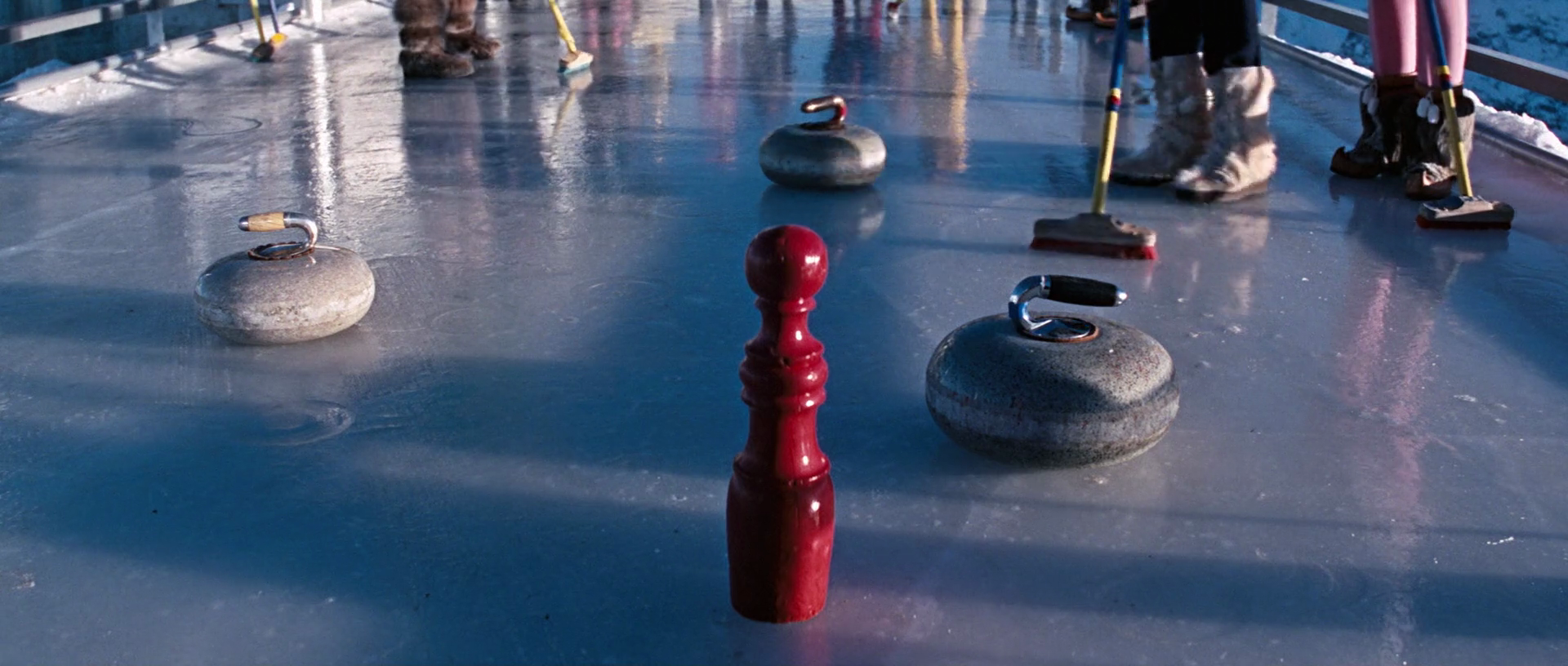
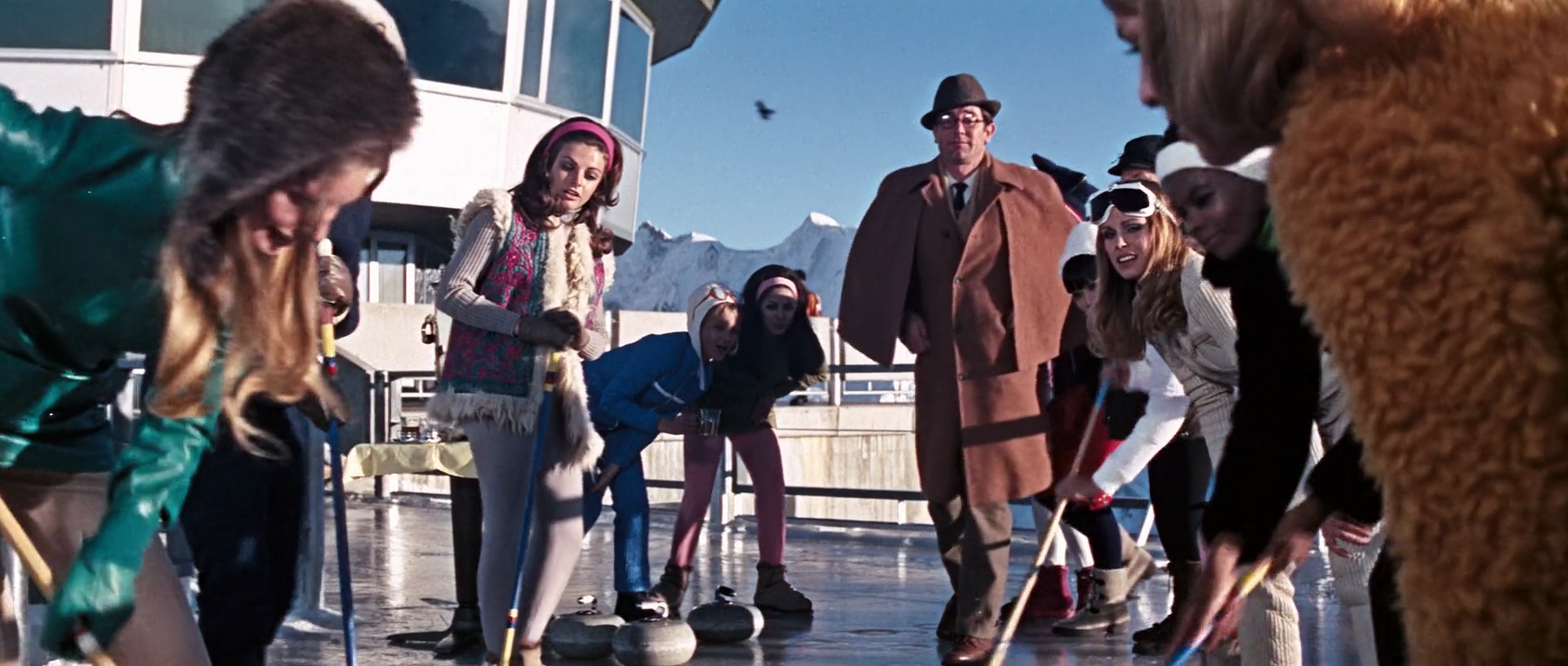
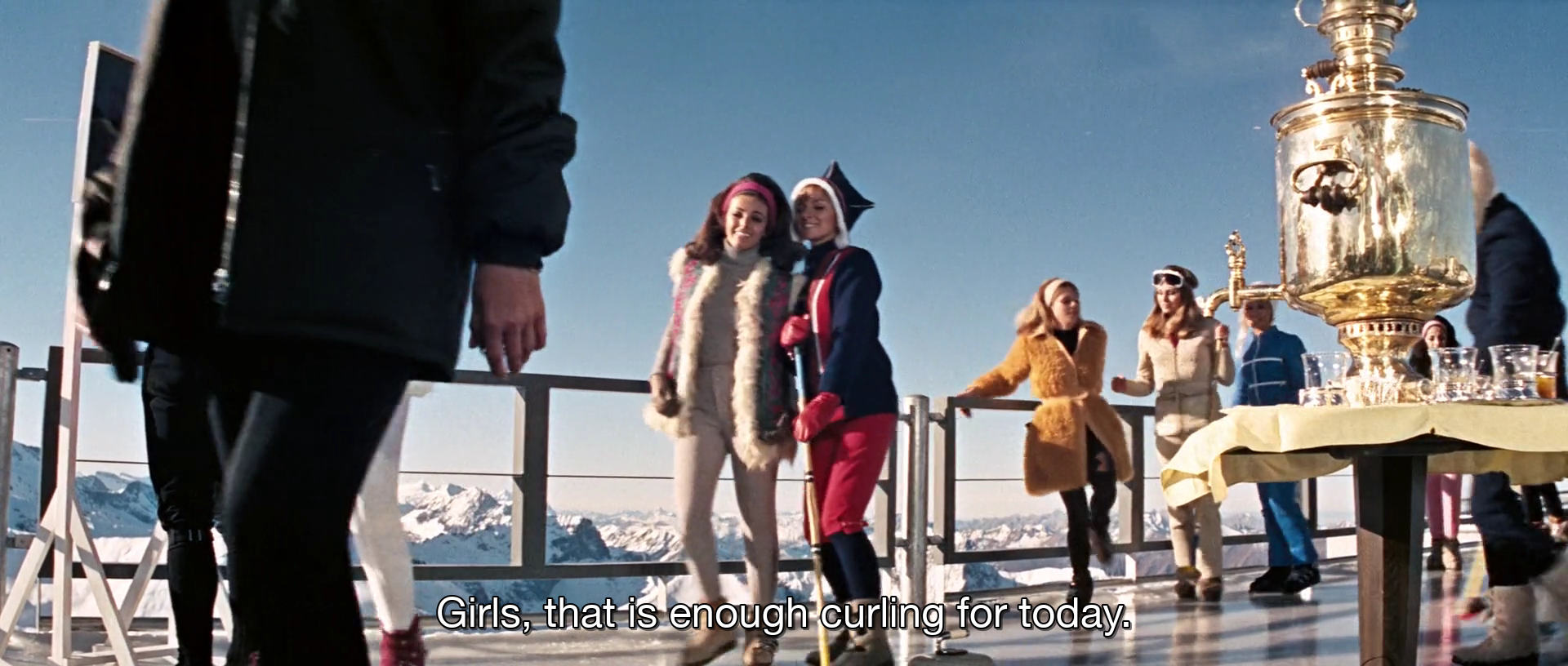
Yes, while undercover at Blofeld’s mountaintop clinic in the Swiss Alps, Bond encounters a casual game of curling, not on a frozen loch, not on a proper rink, but on a polished panorama terrace suspended above the mountainous abyss. Curling is reimagined as chic resort diversion with skittle-like targets and mountain views. A stylised, perhaps slightly sanitised, version of a sport born of parish ice and hard winters.
The irony deepens when you remember that Bond isn’t James Bond here — he’s undercover as Sir Hilary Bray, a Scottish genealogist and heraldry expert inspired by the real-life officer of arms Count Robin de la Lanne-Mirrlees. A man whose entire professional persona revolves around lineage, ancestry, bloodlines. He is, quite literally, posing as a scholar of heritage. And yet, when confronted with a sport invented on frozen Scottish lochs, he admits he doesn’t know how to play. There’s a lovely bit of irony here: the supposed authority on ancestral legitimacy gently out of his depth in a sport shaped by his own landscape. The Highland-rooted secret agent, schooled by Blofeld’s international “patients” in a Scottish game. That this particular Bond is played by an Australian, briefly dubbed into English respectability while impersonating a Scottish genealogist, only sharpens the joke.
Now, to be fair, Bond’s unfamiliarity with the art of curling isn’t some national failing. Not every Scottish person grows up throwing stones across ice. Curling may be culturally rooted, but it’s hardly compulsory. Most of us have never set foot on a sheet.
Still, this is James Bond we’re talking about! A man who can golf (another Scottish export), surf, rock climb, ski, fence, drive on ice, pilot aircraft, and in the Daniel Craig era hurl himself across rooftops like a parkour professional. His physical literacy is practically encyclopaedic. There are few disciplines he cannot improvise at short notice.
Bond can do everything. Except this. And yet… this film is about not doing everything.
There’s something rather apt about curling appearing in this Bond film. On Her Majesty's Secret Service is the rare entry that slows down. It’s about patience. Strategy. Emotional positioning. Waiting for the right moment. Curling, in its restrained way, is exactly that: controlled momentum and the long game.
But OHMSS is also about the limits of control. You can calculate the angle. You can judge the weight. You can send the stone exactly where you intend, and still find that the outcome is not yours to command. Curling doesn’t look cinematic in the traditional sense. It isn’t explosive. It isn’t fast. It’s tension measured in millimetres. And yet it fits perfectly within a film that hinges on a single, devastating final move… one Bond cannot outmanoeuvre.